Air Conditioning Maintenance: Guide to Long-Lasting Performance

Your Daitsu air conditioner is an indispensable companion for ensuring comfort in your home, both on the hottest days of summer and the coldest days of winter. However, in order for it to work efficiently, safely and extend its useful life, regular maintenance is essential.

Well-maintained equipment not only provides better climate control, but also consumes less energy and purifies the air you breathe.

Many users believe that maintenance is a complex task reserved only for technicians, but the reality is that there are a number of simple actions that you can and should perform yourself.

In this comprehensive guide, we will explain the key tips for maintaining your air conditioner and tell you when it is time to call in the professionals for a thorough check-up.

Maintenance You Can Do Yourself (and That Makes a Difference)

These are
simple tasks that we recommend performing periodically, especially before the
start of the seasons of heaviest use (summer and winter).

Cleaning the Indoor Unit Filters: The Most Important Step

Why is it crucial? Filters are your equipment’s first line of defence.

They trap dust, pollen and other airborne particles, preventing them from entering the unit and circulating through the air you breathe. Dirty, clogged filters force the fan to work harder, reducing energy efficiency by up to 15% and decreasing its cooling capacity.

  • How to do it?
    1. Make sure the unit is turned off and disconnected from the power supply.
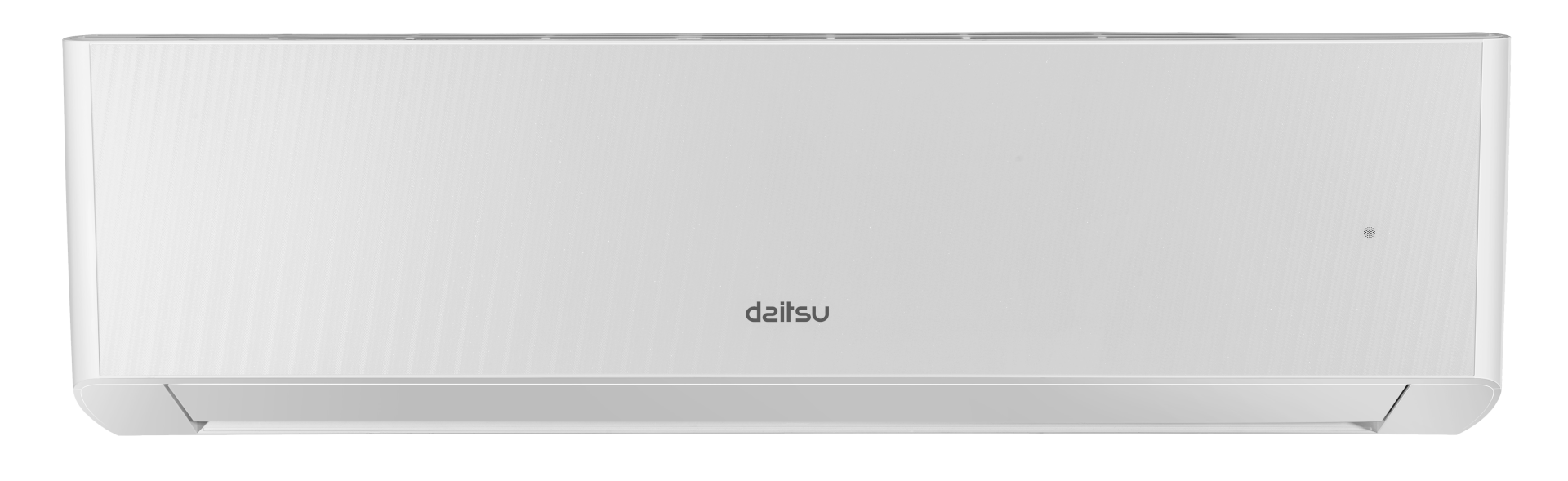
    2. Open the front cover of the indoor unit. You will see some mesh grilles: these are the filters.
    3. Carefully remove them by sliding them out.
    4. Wash them with warm water and mild soap. Do not use hard brushes that could damage the mesh. You can use your hands or a soft sponge to help you.
    5. Leave them to dry completely in the shade (direct sunlight could warp them).
    6. Once dry, put them back in place and close the cover.
  • How often?
  • During the peak season, it is recommended to clean them once a month. If you don’t use them as much, cleaning them at the beginning of each season will suffice.

Cleaning the Indoor Unit (Housing and Fins)

  • Why is this important? Dust also accumulates on the surface of the unit and on the air outlet fins.
  • How to do it? Wipe the entire outer casing with a soft, slightly damp cloth. For the directional fins, you can use a small, soft brush or the brush attachment on your vacuum cleaner to carefully remove any accumulated dust.

Checking the Outdoor Unit

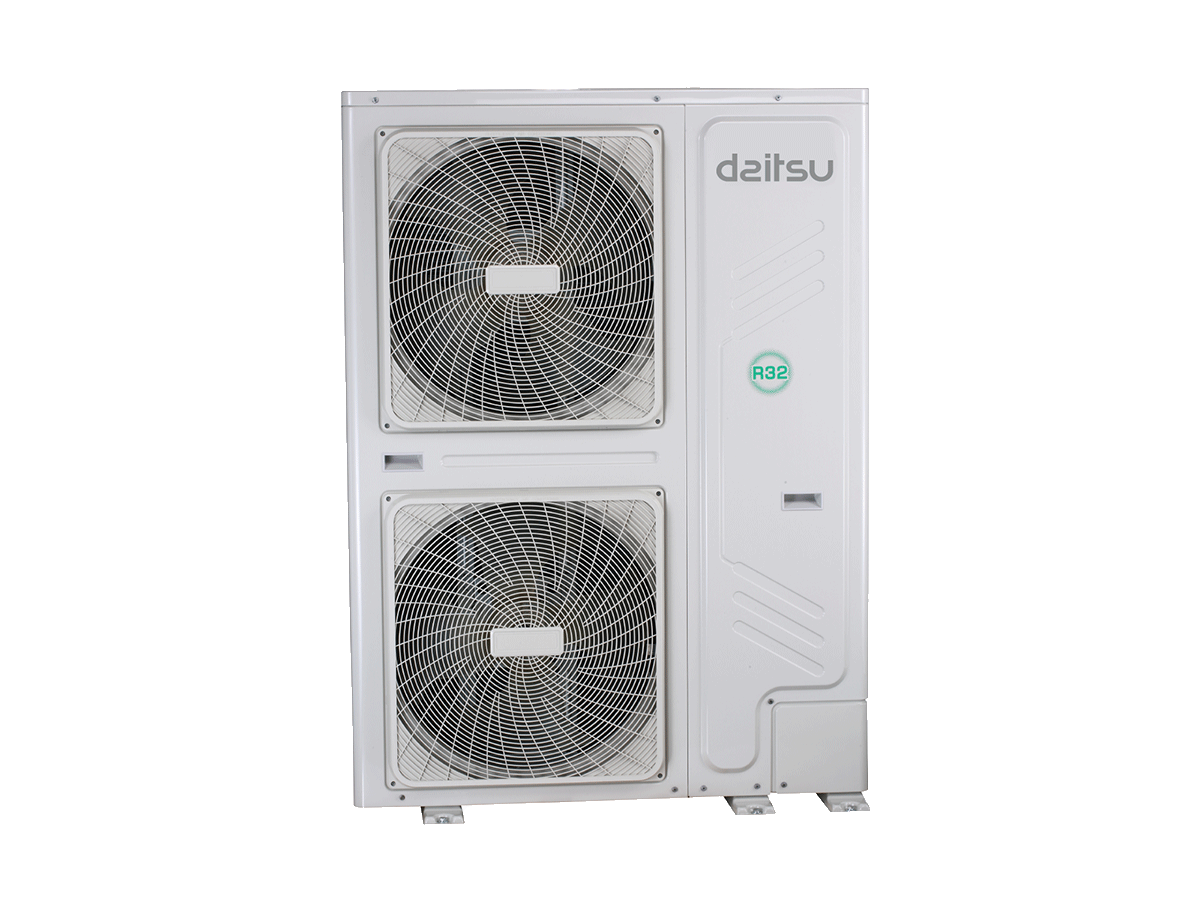
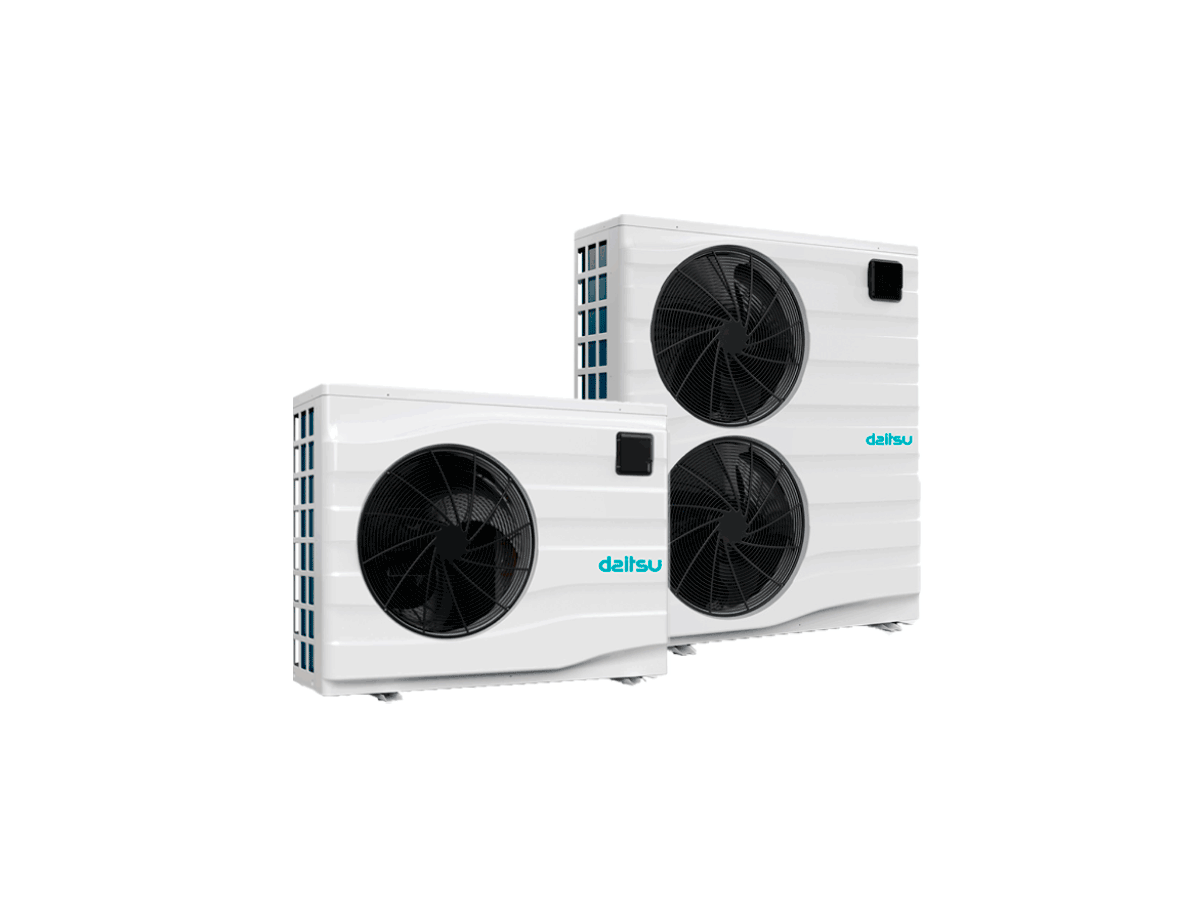
  • Why is this necessary? The outdoor unit is exposed to the elements. Leaves, dirt, or even insect nests can clog the grilles and fan, seriously affecting its performance.
  • How to do it?
    • With the equipment disconnected, visually check that the unit is not surrounded by objects that prevent proper air circulation (leave at least 30-50 cm of free space around it).
    • Remove any leaves, branches or visible dirt that obstructs the grilles. You can use a soft brush to carefully clean the surface.
    • Warning! Do not insert objects inside or use pressurised water, as this could damage electrical components or the delicate condenser fins.

Checking the Drain

Why is it vital? The drain pipe removes water generated by condensation. If it becomes blocked, water can overflow and cause leaks and dampness in the wall.

How to do it: At the start of the summer season (when the most water is generated), check that the drain pipe is not bent, crushed or blocked and that the water is flowing properly.

When to Leave it to the Professionals – Daitsu Preventive Maintenance

The above tasks are essential, but there are parts of the system that only a qualified technician should handle. Having a professional service carried out once a year or every two years is the best investment you can make to ensure the longevity and maximum efficiency of your equipment.

What does a professional service include that you cannot do yourself?

  • Deep Cleaning of the Heat Exchanger and Internal Turbine: Specific bactericidal and fungicidal products are used to disinfect and eliminate any accumulation of mould or bacteria, which cause bad odours and respiratory problems.
  • Refrigerant Gas Charge Check: A gas leak not only prevents the equipment from cooling properly, but also forces the compressor to work harder, increasing electricity consumption and risking serious damage.
  • Electrical Component Inspection: Connections, compressor consumption, and condenser condition are checked to prevent electrical failures.
  • Technical Cleaning of the Outdoor Unit: Technicians can perform a more thorough and safer cleaning of the condenser fins and other internal components.
  • General Functionality Check: All modes (cool, heat, dry, etc.) and functions (such as the I Feel mode or Turbo mode on your Daitsu) are checked to ensure they are operating correctly.

Here is a practical summary of maintenance tasks for your air conditioner:

Cleaning Interior Filters:

Frequency: Monthly (if you use it a lot) or at the beginning of each season (if use is moderate).

Responsible: You.

Cleaning the indoor unit (casing and fins):

Frequency: Every 2-3 months or at the start of the season.

Responsible: You.

Visual inspection of the outdoor unit:

Frequency: At the start of each season of use.

Responsible: You.

Checking the Drain Pipe:

Frequency: At the start of the hot season.

Responsible: You.

Conclusion: Taking care of your air conditioner is taking care of yourself 

Maintaining your air conditioner is a simple but essential task. By spending a few minutes cleaning the filters and performing a regular visual inspection, you will ensure more efficient operation and healthier air. And for complete peace of mind, an annual professional service is the best guarantee.

By following these tips, your Daitsu equipment will reward you with years of comfort, efficiency, and reliability. Because a well-maintained air conditioner means a healthier home and lower energy bills.

How Much Electricity Does an Air Conditioner Consume When Left On All Day? Keys to Understanding and Reducing Your Consumption

With the arrival of hot weather, air conditioning goes from being a luxury to a necessity in many homes. However, along with the relief it provides, a common concern arises: the impact on the electricity bill. The question ‘How much electricity does an air conditioner consume when left on all day?’ is one of the most frequently asked, and the answer, although not a single number, is easier to understand than it seems.

The reality is that not all appliances consume the same amount of energy. Energy consumption depends on a combination of factors, from the technology of the appliance itself to usage habits and the conditions of our home.

In this article, we will break down the key elements that determine consumption and give you the tools to not only calculate an estimate, but also to significantly reduce it, especially with the help of advanced technologies such as those incorporated into Daitsu appliances.

Key Factors That Determine Your Air Conditioner's Energy Consumption

Before attempting to calculate energy consumption, it is essential to understand what influences it:

  1. Equipment Power (kW and BTUs): The cooling capacity of an air conditioner is measured in BTUs or kilowatts (kW). A more powerful unit, designed for larger rooms, will consume more energy than a smaller one. It is crucial to choose a unit with the right power for the size of the room.
  2. Energy Efficiency (Energy Label – SEER/SCOP): This is perhaps the most important variable. The energy label (ranging from G to A+++) indicates how efficient the equipment is. An air conditioner with an A++ rating, such as the Artic model, or A+++, such as the Artic Plus from Daitsu, consumes significantly less electricity to produce the same amount of cooling as a less efficient model.
  3. Inverter technology: This is the big turning point! Old air conditioners (on/off) operated at maximum power until the desired temperature was reached and then turned off, repeating this cycle of starts and stops that generates consumption peaks. In contrast, Inverter technology, standard in all Daitsu units, allows the compressor to continuously regulate its speed. Once the desired temperature is reached, it operates at minimum power to maintain it, avoiding peaks and reducing consumption by up to 30-50%.
  4. Outdoor and indoor temperature: The greater the difference between the outdoor temperature and the desired indoor temperature, the harder the equipment will have to work and, therefore, the more energy it will consume.
  5. Home Insulation: A well-insulated room (double-glazed windows, no air leaks, blinds down during the sunniest hours) will retain the cool air much better, making the air conditioning work less.

Calculating consumption

Although actual consumption varies, we can make an approximate calculation.

First, we must differentiate between cooling power (e.g. 3.5 kW) and electrical power consumption (e.g. 1 kW). You will find the latter figure in the equipment’s technical specifications or you can check the power you need based on the space you want to cool using our calculator.

  • Scenario: A mid-range air conditioner with a nominal power consumption of 1 kW (1,000 W).
  • Use: We turn it on for 8 hours a day.
  • Electricity price: Let’s assume an average price of 0.15 € per kWh.

Calculation:

  • Daily consumption: 1 kW * 8 hours = 8 kWh
  • Daily cost: 8 kWh * £0.15/kWh = £1.20
  • Monthly cost (30 days): £1.20 * 30 = £36

Please note: This calculation assumes that the unit operates at maximum power for 8 hours, which is not the case with inverter units such as those manufactured by Daitsu. Once the desired temperature has been reached, an inverter unit can reduce its consumption by half or more, meaning that the actual cost would be considerably lower.

How Daitsu Helps You Drastically Reduce Consumption

Choosing a Daitsu air conditioner is not just about comfort, it’s a smart decision for your wallet. Its technology is designed to minimise energy consumption:

  • A+++ or A++ Inverter Technology and R32 Refrigerant: The combination of a high-efficiency Inverter compressor and the use of R32 refrigerant (which improves performance) guarantees minimum consumption and optimal performance. Our Artic Plus A+++ series guarantees maximum savings.
  • Smart Wi-Fi Control: Daitsu models with built-in Wi-Fi allow you to manage your air conditioner from your smartphone. Leaving work? You can turn it on 15 minutes before you arrive to find your home cool, instead of leaving it on all day. Forgot to turn it off? You can turn it off remotely. Programming and smart control are synonymous with savings.
  • I Feel Function: The Daitsu remote control has a built-in temperature sensor. When you activate the ‘I Feel’ function built into the Artic PlusCool PRO, o Artic models, it adjusts its operation based on the actual temperature where the remote control is located (and therefore where you are), rather than the temperature detected by the indoor unit. This prevents the unit from working too hard and optimises comfort.
  • Silent Night Mode and Eco Mode: These operating modes, which can be found on our Artic PlusCool PRO, o Artic models, gradually and efficiently adjust the temperature and power, perfect for reducing consumption at night or when intensive air conditioning is not needed.

Additional Tips for Saving Electricity with Your Air Conditioner

Regardless of the model you have, follow these tips:

  1. Set a reasonable temperature: It is recommended to maintain a temperature between 24ºC and 26ºC. Each degree you lower the temperature increases consumption by approximately 8%.
  2. Clean the Filters Regularly: Dirty filters force the equipment to work harder to move the air, increasing consumption. In this article, you can find out how to do this in the best way.
  3. Take advantage of natural ventilation: Ventilate your home first thing in the morning or at night, when the air is cooler.
  4. Use awnings and lower the blinds: Prevent direct sunlight from entering through the windows during the hottest hours of the day.
  5. Close doors and windows: Make sure that the room you want to cool is properly closed so that the cool air does not escape.

Conclusion: Consumption Is in Your Hands (and in the Technology You Choose)

So, how much electricity does an air conditioner consume when it is on all day? It depends. But the good news is that you have a great deal of control over that figure. The key lies in two pillars: smart usage habits and, above all, choosing technologically advanced equipment.

Investing in an energy-efficient air conditioner with inverter technology, such as those offered by Daitsu, is not an expense, but a smart investment that translates into superior comfort and significant savings on your electricity bill month after month, year after year.

Air conditioning power: how many kW do I need and how can I save energy?

At Daitsu, we want you to have the best possible experience with our air conditioners. Today we will focus on the issue of consumption and savings, and to do so, choosing the right air conditioner power is essential to achieving a balance between electricity consumption, comfort and efficiency.

In this article, you will learn how to calculate the ideal power, discover the main factors that influence your choice and get tips for saving energy in your home or office.

The importance of choosing the right power rating

There are several reasons why it is worth taking the time to consider the advantages of knowing this information:

  1. Electricity consumption: Excessive power means unnecessarily high consumption; insufficient power will cause the equipment to work excessively, increasing energy expenditure.
  2. Thermal comfort: An air conditioner with the correct power maintains a stable temperature, without sudden variations or annoying noises.
  3. Efficiency: The ideal air conditioning power prevents operating peaks, extending the useful life of the appliance and optimising its performance.

How to calculate the ideal power

To determine how many kW you need, the following factors are usually taken into account:

  1. Size and shape of the room: The larger the surface area and volume, the more power will be required.
  2. Thermal insulation: Good insulation means less power is needed. Double-glazed windows and well-insulated walls help to retain the cold.
  3. External climate: In very hot areas or areas with long summers, it is advisable to slightly oversize the power.
  4. Number of occupants: Each person contributes heat to the environment. Logically, the more occupants there are, the more power is required.

Recommended power table according to m² (Quick guide BTU/kW)

Below is a guide table to help you determine your needs. As a reference, this table will help you identify approximately how many kW you need depending on the size of the room:

Surface area (m²) Approx. power (kW) Equivalence (approx. BTU/h)
10 – 15 2,2 – 2,4 7.500 – 8.200
15 – 20 2,5 – 2,8 8.500 – 9.500
20 – 25 3,0 – 3,3 10.200 – 11.300
25 – 30 3,5 – 3,8 11.900 – 13.000
30 – 40 4,0 – 4,5 13.600 – 15.300

Remember that these are general estimates, which need to be adjusted depending on other factors. For example, if you have very high ceilings, if you live in areas with extreme weather conditions, or if your home’s insulation is not optimal.

Types of air conditioners and their consumption

If you browse our air conditioner catalogue, you will see that we have different types of models. Depending on your circumstances and situation, you may be more interested in one type than another.

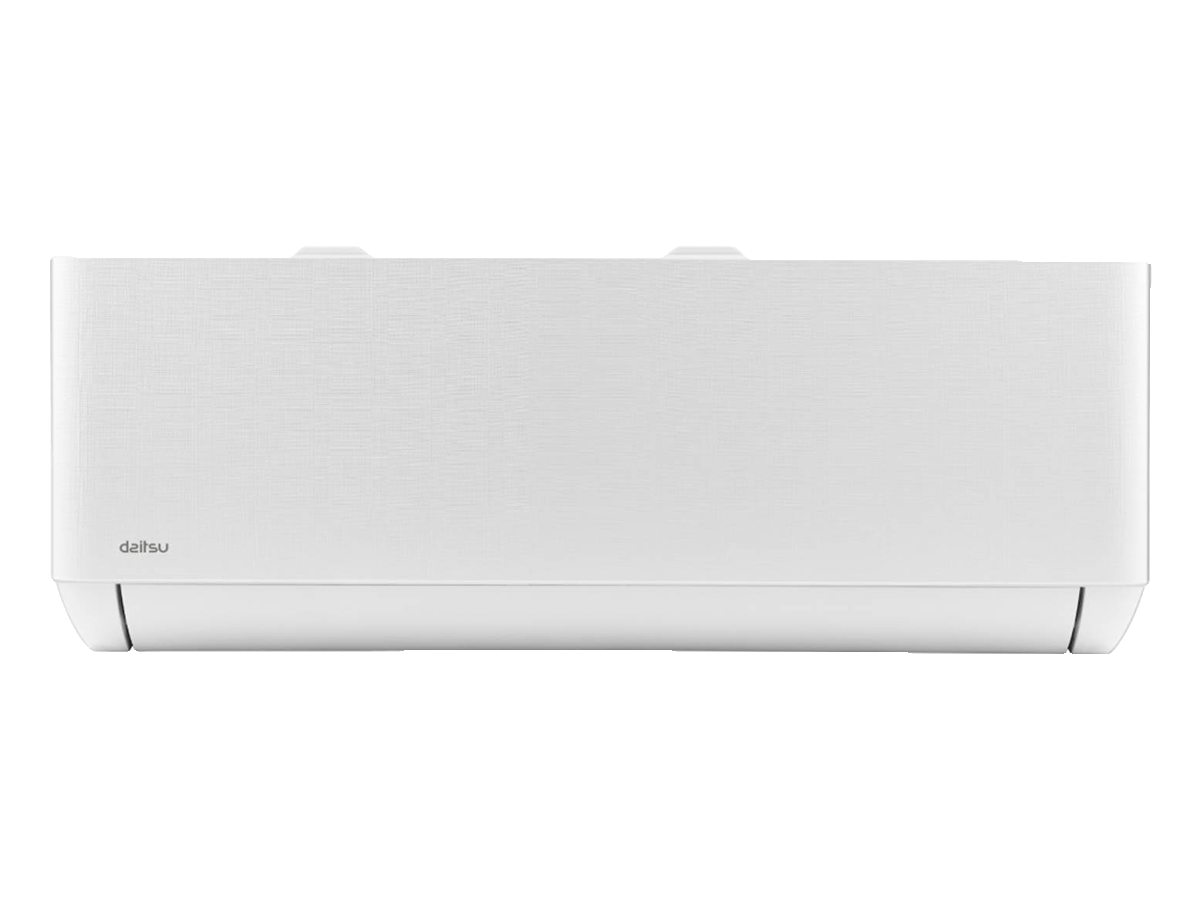
  1. Split: The most common type in homes; offers a good balance between consumption and efficiency. Remember that all our models are inverter models, which means they adapt their power to demand, reducing consumption peaks.
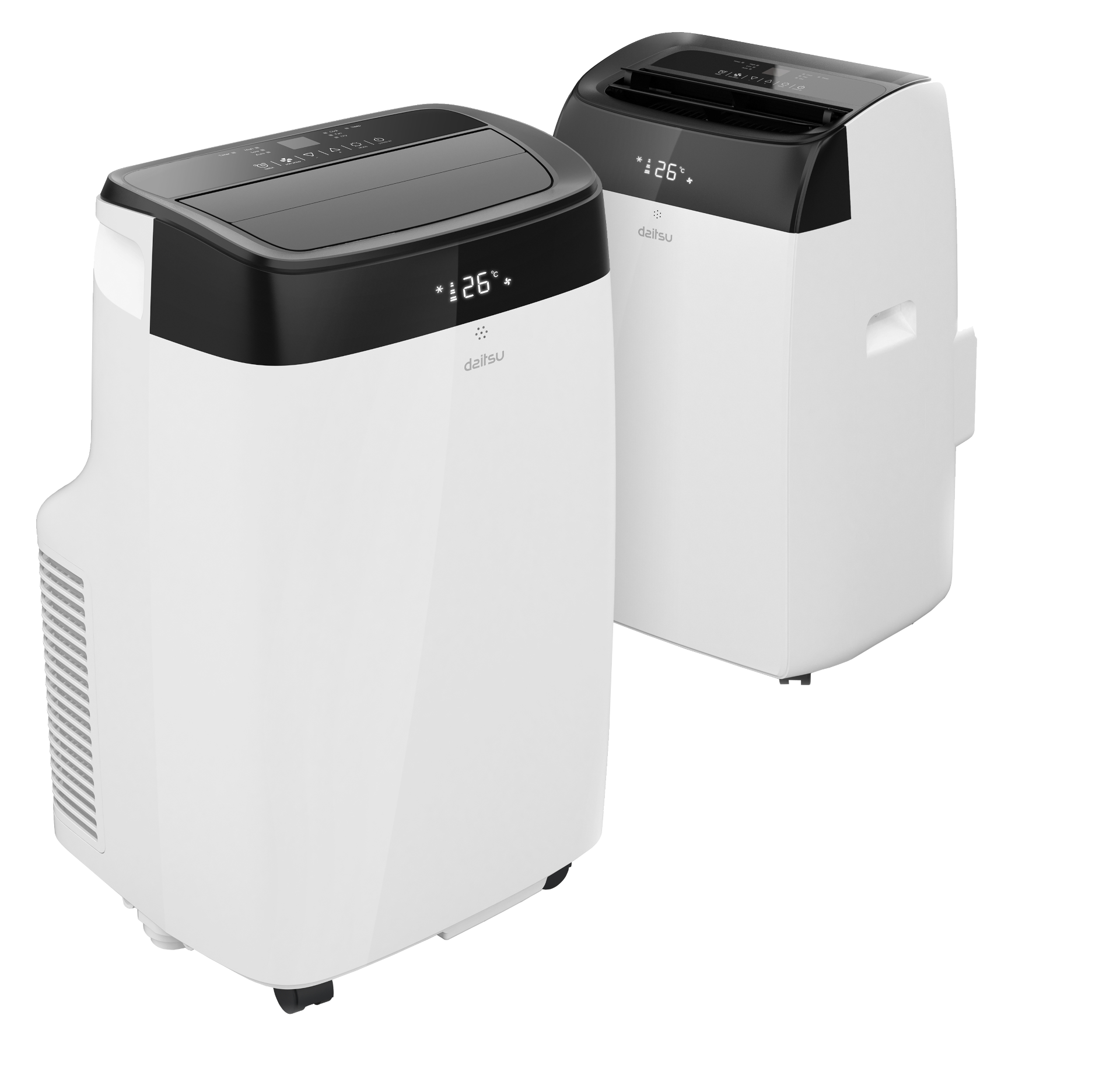
  2. Portable: Ideal for small spaces and changes of location. However, they tend to consume more and be less efficient.
  3. Centralised: Suitable for several rooms or large areas. Higher initial investment, but with better air distribution.

Tips for improving energy efficiency

Now, let’s move on to another important factor: energy efficiency. By taking this into account, you can further optimise your consumption.

  1. Use the thermostat properly: Setting the temperature to around 24-25 °C in summer and 20-21 °C in winter helps to save significantly.
  2. Regular maintenance: Cleaning or changing filters and checking the refrigerant gas improves the efficiency of the equipment.
  3. Smart ventilation: Ventilating during the coolest hours and sealing the room during the hottest hours reduces the workload of the air conditioner.
  4. Good location of the split: Install it away from heat sources (windows with direct sunlight, ovens) and in a position that facilitates air circulation.

Some energy-efficient Daitsu models that may interest you

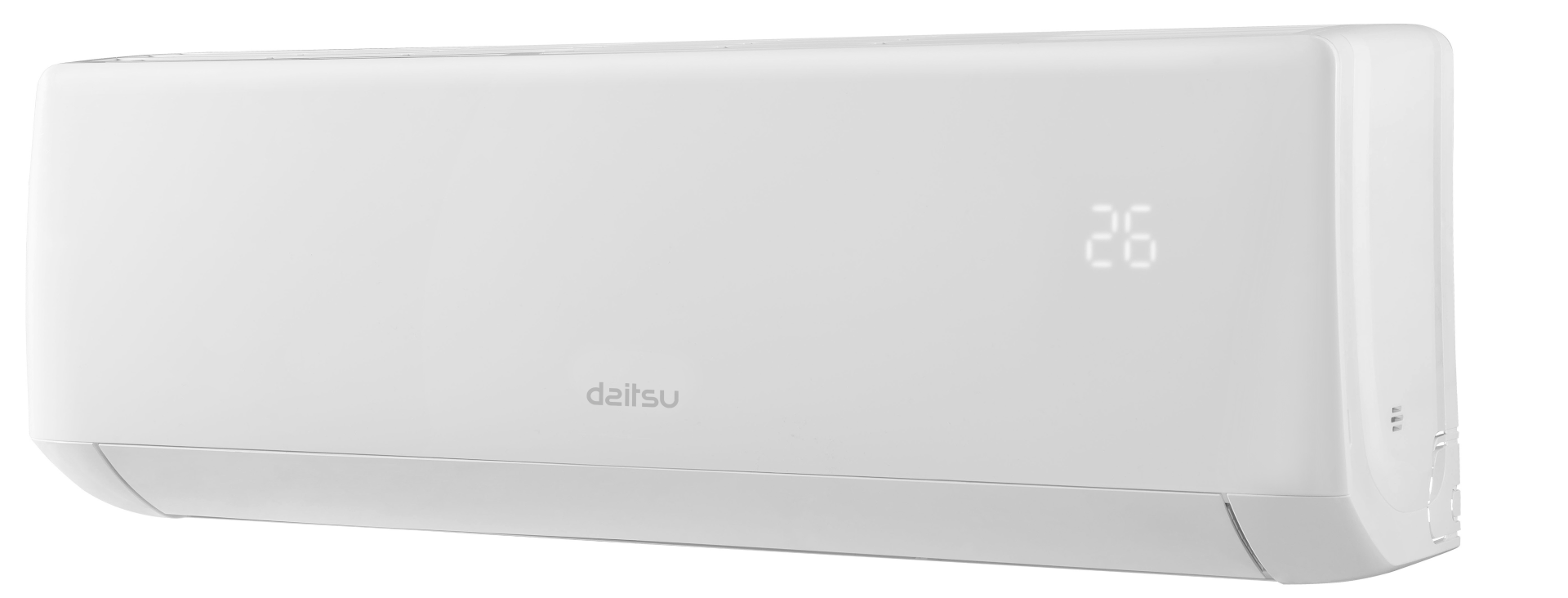
Split Artic Plus: An A+++ unit offering high performance and maximum energy savings thanks to inverter technology and its use of low GWP R32 gas. Key features include ease of programming and a built-in Wi-Fi module for controlling the unit via an app.

Split Artic: The Daitsu Artic (A++) range is characterised by high performance and maximum energy savings thanks to inverter technology and its operation with low GWP R32 gas. Among its main features are ease of programming and a built-in Wi-Fi module as standard for controlling the unit via an app.

Cool Pro: The Daitsu Cool Pro wall-mounted split range features an elegant and compact design with soft lines that blends easily into any type of environment.

Conclusion

As we have seen, the right air conditioning power is mainly determined by the size of the room, thermal insulation and climatic conditions. Before buying, it is worth calculating how many kW you need to ensure optimal performance, thus avoiding excessive consumption and ultimately maximising your comfort.

To achieve real energy savings, maintain a moderate temperature range and perform frequent maintenance. With these steps, your air conditioner will be more efficient, durable, and environmentally friendly.

Final tip: Invest time in analysing your specific needs and comparing different models and technologies. This will help you achieve the best balance between cost, efficiency, and comfort.